




Regular season maintenance tips
Think of maintenance as the core of your business success. It directly impacts:
Your Customers: Clean and reliable equipment ensures a positive and safe experience, which is crucial for getting repeat bookings.
Your Business: Proper care protects your rental fleet—your most important asset for earning money.
Our Brand: It’s a key part of our shared commitment to safety and sustainability. Well-maintained equipment also encourages customers to treat it with respect.
We recommend a full check of your Kayakomat station 1-3 times per week. The exact frequency depends on your booking levels—busier locations need more frequent checks.
Create Clear Routines
Establish a simple checklist for your walk-through. This ensures you never miss a step and guarantees that every customer finds clean, safe, and complete equipment, which is crucial for a positive experience.
Handling Damages or Mess
The Rule: Customers commit to returning equipment in good condition, and you have the right to charge a fee if it’s returned dirty or damaged.
In Practice: If a kayak or SUP is returned in poor condition, please clean or repair it before the next rental. The system makes it easy to see who last used the equipment if you need to request a refund for significant issues.
A Balanced Approach
Remember, the goal is customer satisfaction. While you should charge fees for legitimate messes, sometimes a forgotten wrapper is an honest mistake. Use your judgment to keep customers happy while maintaining high standards.
Need Parts?
You received a spare kit with your equipment. For additional parts, you can always place an order in our dedicated shop for operators.
Here you will find a printable checklist designed to support you during your station rounds.
It includes the key points for cleaning and inspection, perfect to bring along as a handy reference.
Download and print the PDF below.
Key tasks to keep in mind
Locks
Check that all locks work properly, are charged, and have been synced within the last month. Update firmware if needed.
Kayaks & SUPs
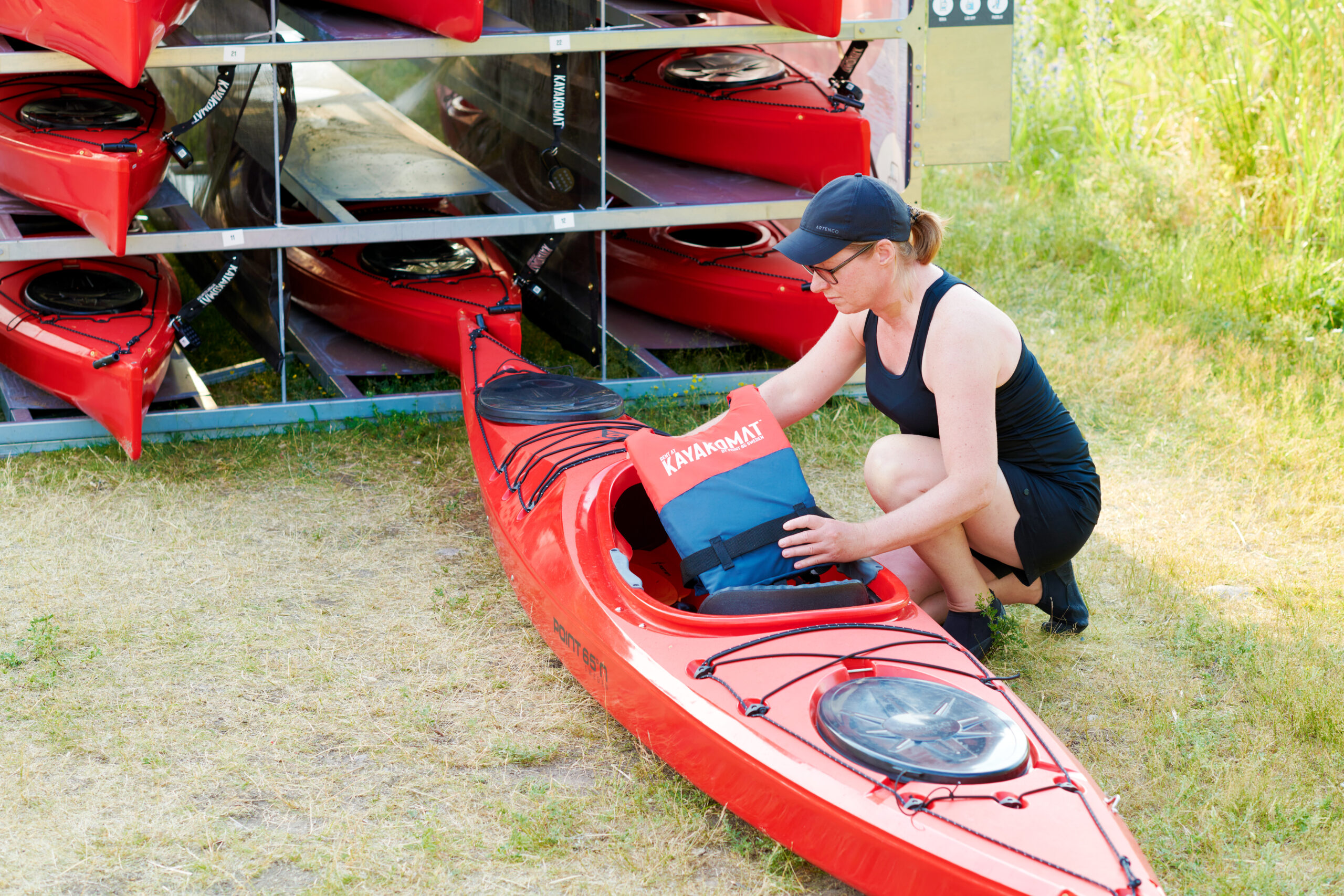
Wipe off algae and salt water from the outside. Remove debris and rinse the cockpit inside.
Equipment
Ensure nothing is missing: paddle, lifejacket, canopy, sponge, etc. Check that paddle blades are securely attached.
Lifejackets
Make sure they are dry. Hang them out to dry or replace with spares if needed. Fresh lifejackets are essential for a good customer experience.
For a full overview, including ropes, hatches and detailed routines, check the complete checklist in the PDF.
Keep Life Jackets Clean, Dry & Fresh
Maintaining clean and dry life jackets is crucial for both customer comfort and safety. Here’s how to manage it effectively.
Routine Care:
Air Them Out: Regularly hang life jackets in fresh air during station inspections.
Have Spares: Keep extra vests in rotation to allow for proper cleaning and drying.
Cleaning & Mold Prevention:
While small, dark mold stains are common and often permanent, regular cleaning controls odors and stops new growth.
Simple Cleaning Steps:
Hand Wash with a mild detergent (like dish soap) and water.
Treat with Vinegar: Spray with a 50/50 vinegar-water solution, wait 10 minutes, then rinse. This kills spores.
Dry Thoroughly before storage. Never machine wash life jackets.
Extra Protection:
For longer-lasting colors, use a UV-protection spray designed for fabrics.
Policy for Additional Charges
If a customer returns equipment with excessive dirt, rubbish, or requires repair, you may charge a cleaning fee.
Key Principles:
Charge only when reasonable and proportional to the mess/damage
Ensure you are certain about which customer caused the issue
How to Request a Charge:
Contact our support team with:
The booking number
The amount you wish to charge
A brief description of the issue
Our support will help you process the after-charge.
Monitor Reviews for Quality Control
Customer feedback about dirty equipment or missing items can be found in the “Reviews” section of your Admin page. Treat such reviews as an urgent alert to fix issues immediately. If negative feedback increases, it’s a clear sign to improve your cleaning routines—this is crucial for your success.
Follow these steps if you have heavily worn kayaks/SUPs that need replacing:
1: Sell via Second Hand
Try selling in our second-hand shop and other sales channels first. This avoids freight costs for returning old equipment.
(Button: Go to Second Hand Shop)
2: Request Replacement
Fill out our replacement form and describe the equipment’s condition with photos. One from our team will get back to you whether the replacement is approved or not.
If approved, you can either:
Collect from our warehouse
Pay freight for delivery
Tips for second-hand sales OR spring cleaning
Before you put your kayaks or SUPs up for sale or for the upcoming season, it’s good to give them a refresh.
Here are some simple tips that can help:
Give Your Kayak or SUP a Deep Clean
A thorough cleaning, inside and out, is the first step to making a great impression and getting the best value.
Surface Wash: For polyethylene (PE) kayaks and SUPs, start by cleaning the surface with a common household cleaning spray or a mild degreasing agent. Avoid harsh chemicals like chlorine or solvents.
Enhance & Protect: For a fresh, like-new look, apply a UV-protection spray after washing. Let it dry and then gently polish the surface with a clean cloth. This step restores shine and protects the plastic.
For deeper scratches, polishing can significantly improve the appearance.
Method: Use a polishing machine with a soft pad (e.g., sheepskin) to buff out minor scratches on the deck and hull.
Important Note: To ensure a uniform shine, you will need to polish the entire section (e.g., the whole hull). This technique only works on smooth, glossy surfaces, not on textured/matte areas.
Final Step: After polishing, apply a UV-protection spray to seal and freshen the surface.
Helpful Tip: For a visual guide, search for “plastic kayak polishing” DIY videos on YouTube.
Give the ropes and fittings a quick check to ensure everything is safe, secure, and looks well-maintained.
Ropes: Ensure all lines are clean, properly tensioned, and free from significant wear.
Knots & Ends: Check that all knots are secure. If any rope ends are frayed, carefully melt them with a lighter to seal them.
Hardware: Tighten all screws and fasteners on the kayak/SUP and the stand.
Use silicone spray to lubricate the rubber hatches. You can also spray the edges of the hatch opening with silicone spray to extend the life of the rubber.
Pay attention to the cockpit and seating area, as these are key areas a buyer will inspect.
Cockpit & Seats:
Vacuum the cockpit to remove all sand and dirt.
Clean the backrest cushion thoroughly and ensure it is completely dry.
Note on Seat Cushions: If your kayak has a removable seat cushion, it is often best to remove it for the sale, as these tend to be worn out.
Use diluted vinegar to eliminate any bad odors.
Parts & Accessories:
Replace any broken or damaged parts before sale.
If selling with a rudder, ensure the rudder package is ready for installation. It can be ordered via the MyKayakomat shop.
Taking these final steps will significantly improve the kayak’s appearance and value, ensuring a successful sale. Good luck!
Repair and fix
A few things may arise that require a bit more fixing and mending. It may be more or less difficult to do so, so if you have a problem, get in touch. Here are some tips and advice on how to fix the most common problems that can occur.
A loose bulkhead (the wall between the storage compartment and cockpit) is a common issue with polyethylene kayaks that can let water through. Fortunately, it’s an easy fix.
Why This Happens
Overloading the storage hatch or pushing with your feet
Temperature changes causing pressure build-up in sealed compartments
Natural wear where the original sealant loses adhesion
Repair Instructions
For Simple Re-sealing:
Push the bulkhead back into its proper position
Apply SikaFlex sealant around the edges (like caulking a window)
Dip your finger in soapy water and smooth the sealant for a clean finish
If the Bulkhead Won’t Stay in Place:
Gently remove the old sealant
Use MarinGoop adhesive in several spots to help hold the bulkhead in position
Complete the seal with SikaFlex 221 around all edges
Smooth with a soapy finger for proper sealing
Pro Tip: Watch our instructional video for a visual demonstration of this repair.
Check that the paddle works properly, can be adjusted and that the paddle blade is firmly attached to the shaft. If necessary, lubricate with rust remover or wipe off salt and sand with a cloth.
Follow these steps to keep life jackets and cockpit covers (sprayskirts) clean, fresh, and durable.
Cleaning Process:
Wash by hand using a mild detergent and lukewarm water.
Rinse thoroughly with clean water to remove all soap residue.
Never use a washing machine, bleach, or strong detergents.
Mold & Odor Treatment:
After cleaning, spray with a 50/50 vinegar-water solution.
Let it sit for 10 minutes, then rinse with clean water.
Allow to dry completely before storage or reuse.
Important Note: Small black mold stains may not disappear completely, but this treatment effectively eliminates odors and prevents new mold growth.
If anything is broken or damaged, make sure to order and replace the necessary parts.
Prepare for possible rudder installation if you are selling the kayak with rudder package. The rudder package can be ordered on the MyKayakomat shop.
Caring for your kayak or SUP regularly will not only extend their lifespan, but also improve their appearance and performance. Good luck with your preparations for sale or the upcoming season!